A lot has been said about AI. One statement from Mr.Vinod Khosla caught my eye. To quote - “By 2050, it'll be very clear that nobody needs jobs because with enough production of goods and services that are near free, you won't need jobs.”
This made me wonder, could it be possible? And secondly, what if it is possible?
Let us understand the base concept first.
How Economies Were Built
The earliest form of economic activity started with the barter system. Over time, value got attached to particular produce and it started attracting better yields. This led to the introduction of money as a concept of value and today we are here.
Across this evolution, two constants remained:
-
Buyer and seller
-
Product or service of value
This unit transaction is what builds the economy at a larger level.
Can Machines Create an Economy?
Machine and AI per se cannot create an economy. They are tools to create. But value perception is driven by human needs and wants. Even assuming super-intelligence, the trade that happens between machines will create only virtual value unless it ultimately serves human utility. Without human participation, perception and demand, it is difficult to anchor a real world economy.
Economy, at its core, is human.
The Possibility of Abundance
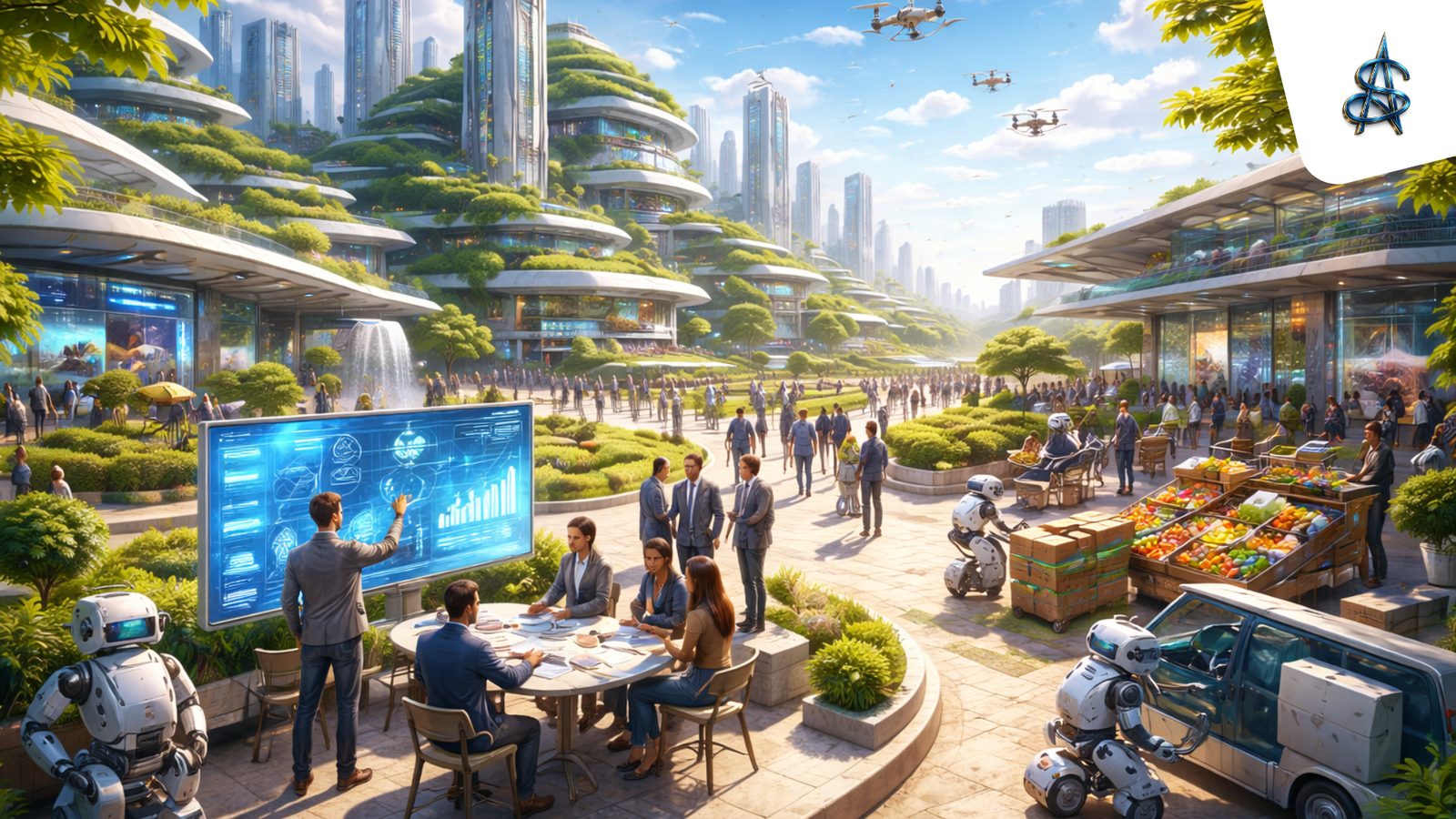
In the future, it is quite possible that the scale of production, both products and services, due to AI might be so high that costs plummet to abysmally low levels. Basic needs such as:
Food
Shelter
Clothing
Healthcare
Transportation
Communication
can be revolutionized through technology at scale.
This might lead to a phase where these are commoditized. I believe this is the point Mr. Khosla is trying to raise. Even with very little work done, one might be able to fulfill basic needs. It is also possible that Governments run social programs at scale to meet these needs efficiently.
What Then Drives Effort?
People with aspirational needs might have to do more. This is where I see the barter system making a comeback, though in a very different manner. Not necessarily exchange of goods, but exchange of skills, creativity, reputation and intellectual contribution.
However, there is also a risk of dystopia if Governments fail to bridge the divide between the haves and the have-nots. Abundance without fair access can deepen inequality instead of solving it.
A Question That Stays With Me
As someone who works closely with entrepreneurs, MSMEs and capital formation, I keep returning to one question - If survival becomes easy and production becomes automated, what becomes the true driver of value creation?
Capital, incentives and human aspiration may still matter deeply. Technology can reduce effort, but it cannot replace ambition, purpose and the desire to build. Interesting times ahead.
What are your thoughts about the future?